

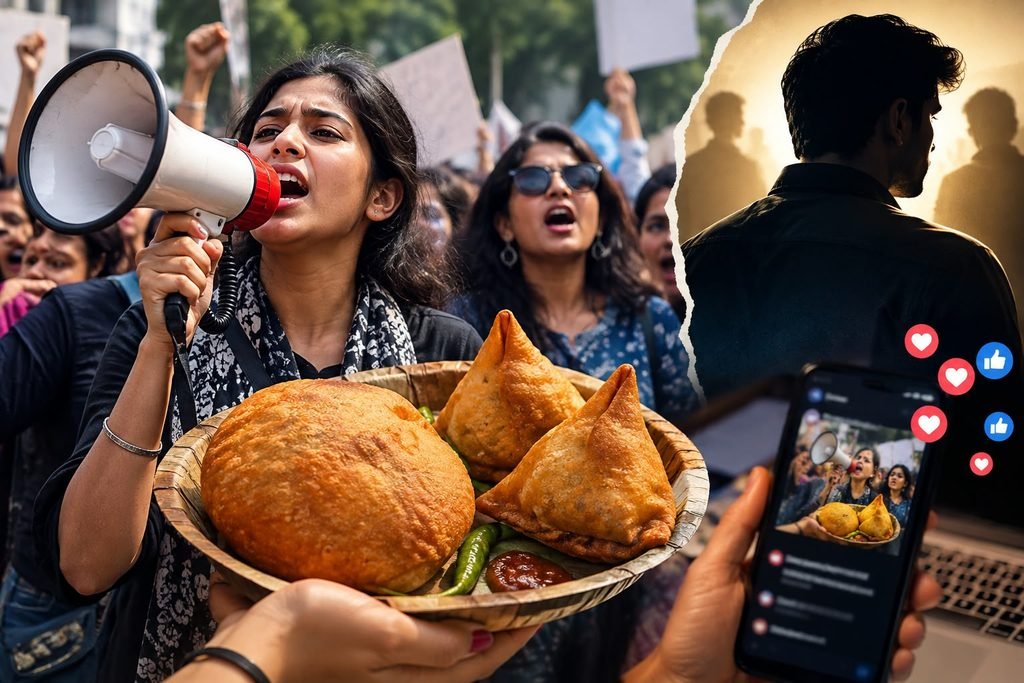
NEW DELHI: The “Ek Kachori Do Samosa” viral trend has taken social media by storm. Protests have traditionally been spaces of intense anger and serious demands, but Gen-Z has officially entered the chat, bringing their signature blend of sarcasm, meme culture, and unapologetic swagger to the frontlines. A recent video of female students at a protest has completely taken over social media, and it is all thanks to one unexpectedly catchy and hilarious
chant: “Ek kachori, do samosa… in mardo ka kya bharosa!” (One kachori, two samosas… men can’t be trusted!).
What started as a vocal demonstration on the streets of Delhi has rapidly evolved into a full-blown internet slogan war between men and women, dominating Instagram Reels, X (formerly Twitter), and YouTube Shorts.
Ek Kachori Do Samosa: Gen-Z Creativity Meets Activism
The viral footage shows a massive group of college girls chanting in perfect unison. Instead of traditional political slogans, they opted for witty, rhyming one-liners that use Indian street food to take a sharp, sarcastic dig at patriarchal mindsets and male unreliability.
This new wave of activism proves that a message does not have to be grim to be impactful. By weaponizing humor, these young women ensured their voices reached millions of smartphones across the country. The catchy rhythm of the chants made them instant meme material, sparking a viral audio trend.
The slogans echoing across the internet include:
- “Ek kachori, do samosa… in mardo ka kya bharosa!” (One kachori, two samosas… men can’t be trusted!)
- “1 Jeera, 2 Ajwain… Mard jaat de resign!” (1 Cumin, 2 Carom seeds… Men, hand in your resignation!)
- “Garam-garam Vada Pav… Mard jaat sudhar jao!” (Piping hot Vada Pav… Men, mend your ways!)
- “Ek sutta do chai… Mard jaat haye-haye!” (One smoke, two teas… Down with mankind!)
The Ultimate Comment Section War
The internet never leaves a trend unanswered. As soon as the “kachori-samosa” chants went viral, men flooded the comment sections to defend their turf, sparking a hilarious and highly engaging “slogan battle.”
Instead of getting deeply offended, many users matched the women’s energy, firing back with their own food-themed rhymes. The comment sections of these viral reels have become goldmines of modern internet humor.
The men’s counter-slogans taking over the comments:
- “1 Idli, 2 Dosa… Har mard nahi ek jaisa!” (1 Idli, 2 Dosa… Not all men are the same!)
- “2 Pyaz ek Biryani… Har mard ki alag kahani!” (2 Onions, one Biryani… Every man has a different story!)
- “Makke ki roti, sarso ka saag… Nari shakti zindabad!” (A wholesome surrender praising women’s empowerment).
The Real Message Behind the Memes
While the rhymes are undoubtedly funny and the internet is having a field day with the slogan war, the core reason behind the protest remains highly sensitive. The demonstrations are rooted in deep frustrations regarding women’s safety, rising crime rates, and the societal tendency to blame women rather than hold perpetrators accountable.
By using street food analogies and sarcasm, these young women have successfully hacked the social media algorithm. A traditional, angry protest video might have been scrolled past by the average user, but this creative approach forced the entire nation to stop, watch, laugh, and ultimately engage with a demonstration led by women demanding better societal standards.
The “Ek kachori, do samosa” chant is no longer just a funny piece of audio; it is a cultural internet moment. It perfectly captures how today’s youth handle heavy societal issues—with a megaphone in one hand and a viral meme in the other.